
Tag: okul
Imagination in Action -> Creativity
Tsundoku
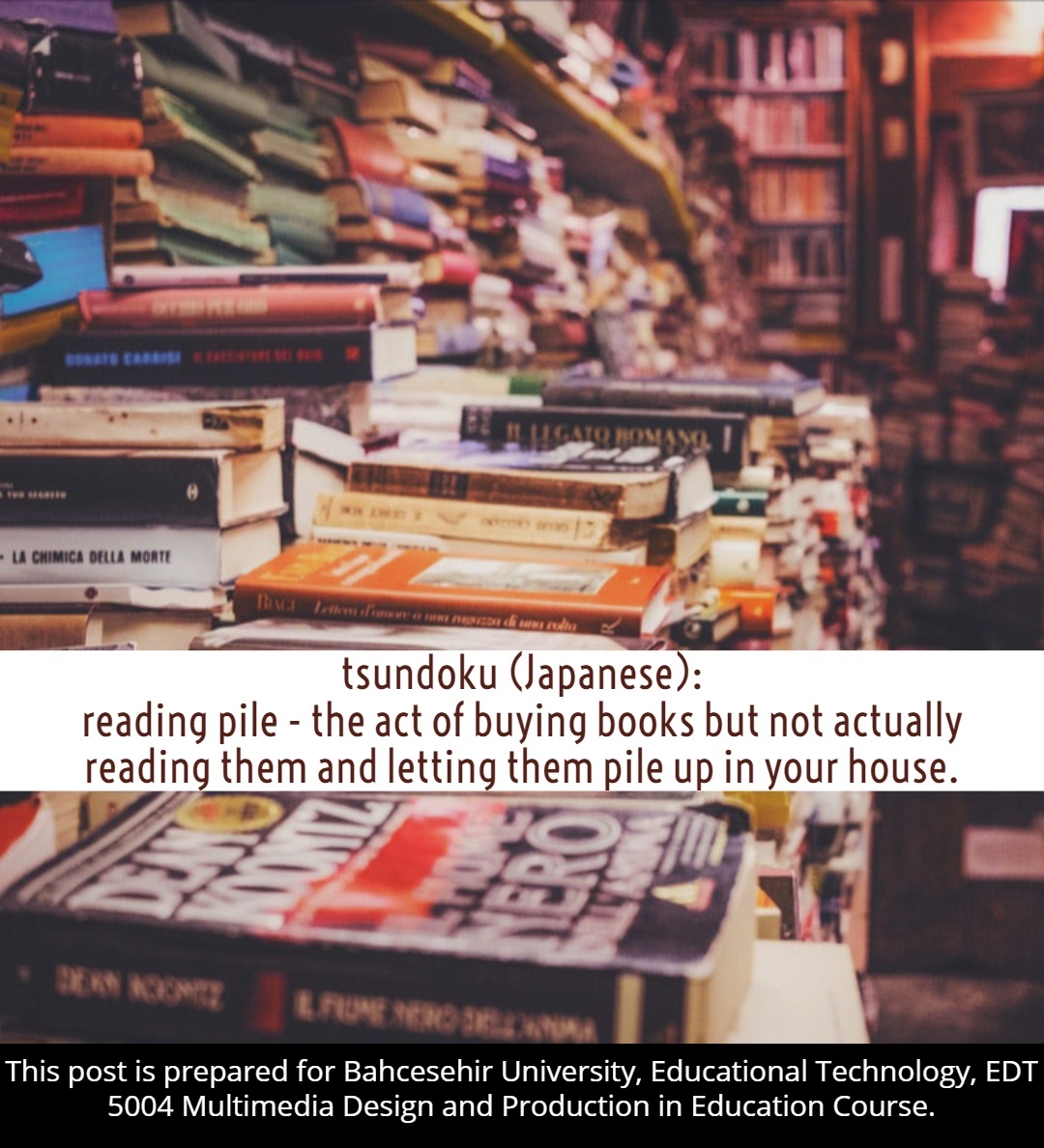
Tsundoku is a Japanese word which means to buy books that you cannot read at all and pile them up. I think it is the disease of this age. However, to be a good reader, I think it is best to be surrounded by books. To want to be a good reader is not enough, you also have to buy the time in order to read the book that you bought.
Moreover, to pile up the books that you get from a bookshop or an online shopping website is a problem that every good reader will face someday. This situation creates a feeling of guilt, but the books we pile and don’t read have an effect on us as much as the books we read. The unread books remind us that we still do not know everything and thus they keep us away from egoism. If we do not keep our library expanding, our enthusiasm to read books and personal evolution will stop eventually. The unread books keep us wonder continuously.
Do not hesitate to fill your personal library with unread books. They will expand your curiosity and imagination. A library filled with books that you read will lose its power, but a library with books that you haven’t read yet will be a remarkable one. So, do not afraid to pile up some books. 🙂
Let’s Begin :)
When I first read this motivational sentence, I spent some time thinking on it. Everyone wants to be great, no one is okay with the average. The thinking process is fine, but the way through greatness is the hard one. But, hey, if you do not start, you will never know. Besides life treats different to everyone, so who knows? 🙂
I just want to mention one or two things more. I searched this sentence both in Turkish and English pages, and the difference between them made me felt pity for my country. On English websites, there are articles about this sentence, they thought really hard on it and made comments about the sentence and the author himself, who is a motivational speaker, Zig Ziglar. They came up with new ideas and new motivational speeches after the sentence.
On the other hand, when I wrote the Turkish meaning of this sentence, Google brought me only quote sites, motivational sentences sites, adages sites, whosesentencesarethose.com kind of sites… It was really disappointing. We stopped thinking, we are not creating anymore, we are not producing. We should be motivated by these sentences and achieve greater successes, but we’d rather make show.
We must stop this nonsense, and put our reality glasses on at once. So let’s begin 🙂
Edpuzzle
Hello again, today I want to share my experiences with Edpuzzle. Last week I taught Second Conditional to my 7th graders and started to search for a way to make my students revise it. Last Thursday, in our Multimedia Design class (Master), my friends introduced a great web 2.0 tool that I can use in my own classroom in order to boost 2nd conditional. Here is the new tool that our students can enjoy and learn while using it at the same time: Edpuzzle.
Edpuzzle is a massive video platform which helps teachers to create amazing video lessons. It also ensures students learn with a high rate of participation. Teachers can pick a video from KhanAcademy, Youtube, National Geographic, TedTalks, Veritasium, and other video provider sites and edit it according to the related course for free. You can also add and edit your own videos.
Edpuzzle is the easiest way to make any kind of video interactive.
Here is the video I have just edited: Edpuzzle – Second Conditional
Enjoy 🙂
A Creative Classroom Application: “ Ask me! ” Hat
“Our classroom is our stage.”
Sometimes the teacher might get exhausted by the questions coming from the students. Not only the questions about the lesson but the questions such as “Can I sit next to my friend? Can I use my red pen? Which pencil should I use? Can I write it here?” These questions might seem innocent but answering that kind of questions every minute, every day seems actually a huge burden for the teacher. Moreover, the tolerance of the teacher decreases day by day through the year while they are on their favorite stage – the classroom.
However, there is a simple application that can be applied to class easily. Think that there are 4 hats – “Ask Me!” written on them – in the classroom hanging on the wall all the time. 4 students can wear hats when there is an activity going on in the class. If the other students have a question during the class, they can ask it to the hat wearers. If the students on duty do not know the answer, the can simply ask it to their teachers and convey it to their friends.
This application might lighten the burden on teachers’ shoulders for a bit and lets students take an active role in the learning process. This might also be called “peer teaching” if it is preferred to be used in that way.
Please comment below if you have any ideas more like this one.
Thank you for reading.
This post is taken from https://www.egitimpedia.com/yaratici-bir-sinif-uygulamasi-bana-soru-sor-sapkasi/
Instructional Goals
So in this post, I want to talk about assessing needs to identify instructional goals (Dick & Carey, 2001). Dick and Carey mention the significance of the needs assessment process in order to achieve the instructional goals like “skills, knowledge, and attitudes”. Designers mostly focus on acquisitions at the end of the course. The acquisitions also take place in my yearly plan (guess what? I’m a teacher 🙂 ) and they are like “students will be able to take notes while listening”.

The problem, the solution, and the instructional goal have to be crystal clear. As the authors said, “identify the problem” and find solutions about them is not an easy task. We, as learners, have to find a problem and try to identify a solution, too. We should emphasize the acquisition part which is the main goal of instructional design.
To learn more, check Dick & Carey (2001) – The Systematic Design of Instruction, Chapter 2.
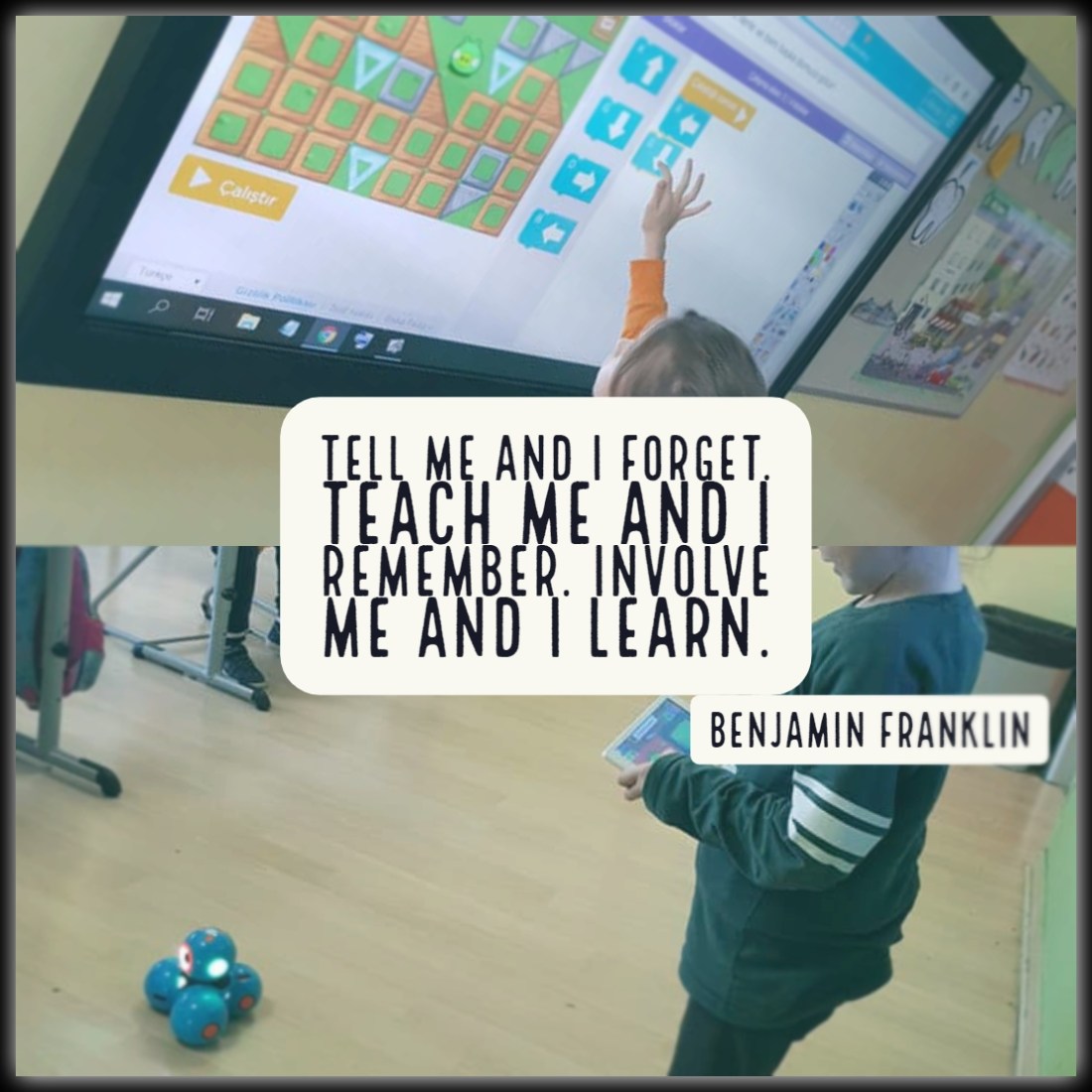
Involve Students in the Learning Process
Unknown Future
6th Educational Technology Summit

Yesterday on 2nd March of February, I had a chance to attend the 6th Educational Technology Summit spectacularly coordinated by Işıl Boy Ergül. It was instructive and educational training that lasted from 8 am to 7 pm. Every second was filled with knowledge and joy. It was really successful in terms of raising awareness and consciousness about the future in education.
This year, suitable with the motto of the event (From Past to Future), a group called Flapper Swing appeared on stage with the dancers. They were unexpectedly fascinating, professional and quite fun, however, I would expect a more technological opening.

In the workshops and presentations, I found answers to questions like “How can we use technology effectively in education? How can we be creative in the lesson and does creativity have any boundaries? How can we create rich lessons using AR and VR applications? What is Artificial Intelligence and what is the relationship between AI and education? Do school designs affect success? How to be a game-friendly-school?” Serdar Kuzuloğlu, who made the closing speech, mentioned about the uncertain future that is waiting for us and how hard is to educate our children to that unknown future.
The summit was really energetic, you can see the excitement on staff members’ face. It was obvious that they worked hard, and it was worth it. It was a day full of learning, technology, and fun. I would like to thank personally the architecture of this successful summit, Işıl Boy Ergül, and her cool organization committee to bring such valuable people together. I am looking forward excitedly to the ETZ20.

If you want to know more about the summit, you can follow their Instagram account: “edtechsummit” or you can visit the website: https://www.egitimteknolojilerizirvesi.com/en/
 Educational Technology