The previous semester, I had the chance to take the Instructional Design Course from Ayhan Doğan who is a great teacher. So I want to share some of my notes here which I took before, during and after the lesson.
First I want to start with the Introduction to Instructional Design (Dick & Carey, 2001). I’m just going to make a brief summary of that chapter with some visuals I prepared.
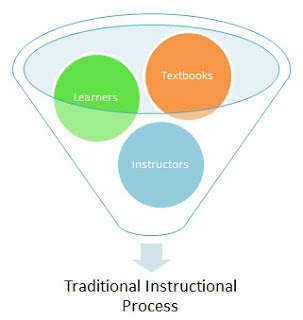 The first chapter starts with a traditional instructional process which contains only learners, textbooks and instructors. To teach the students already existing content in their textbook was the duty of the teacher. According to this, training the teacher would be enough to raise the learning.
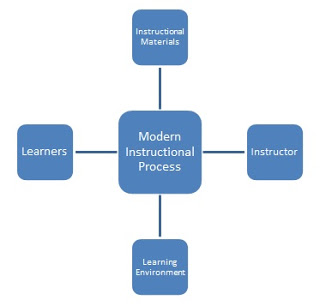 However, the modern appearance of the instructional process includes learners, instructional materials, instructor, and learning environment. It is more systematic. In the chapter, we also have a chance to find the answer to a question: What is a system? In a system, every single unit reckons upon each other. Every unit of the system (materials, instructor, learner, environment) is related to each other. The failure of one means the hitch of the whole. The instructional system evolves whenever something goes wrong, it automatically starts to look for a solution that can make itself better. For example, if a student has a problem with the present perfect tense and s/he doesn’t understand the way the instructor taught, then a new way should be found. But on the contrary, I believe the system should change continuously. The process should improve progressively without needing a failure in order to change.
In the “Components of the Systems Approach Model” part, Dick and Carey explain us the instructional system design step by step. I think this part is to ease our understanding of the whole concept. However, as the authors said, if you are a novice, you will understand the system better when “you begin to use” it. So the first chapter crayons the aims, the utility of the instructional process and why should we use the systems approach.


 Educational Technology